
Inadmissible to Canada
Applying for a visa can be a complicated and often stressful process, but when you add the possibility of being inadmissible to Canada, the situation can seem insurmountable.
IAS can offer expert advice on your situation, discuss your options to overcome inadmissibility and guide you through the visa application process. Contact us online today at +1 844 312 4979, and let us help you realise your Canadian dream.
Call us on +44 (0)333 414 9244 for immediate help and assistance

We have helped over 55,000 people get their visas approved the first time
Complete the form below to request a call back
Benefits of Choosing IAS For Your Work Visa
Our team of immigration lawyers can provide the right support to ensure you secure a work visa for yourself or your employees.
.
Your immigration lawyer will consider your case and offer bespoke advice, and they will advise you on the optimum route to take to achieve your desired result.
By working with IAS for your or your employee’s work visa, you make sure that you have an expert eye and hands on your case to boost your chances of success.

We ensure you are applying for the most suitable work visa to boost your chances of success.

We provide advice on the appropriate documentary evidence required to support your case.

You get a personalised approach from a qualified and experienced immigration lawyer

You work with you and liaise with the Home Office on your behalf to ensure the best possible outcome.
Services we Provide




Understanding Inadmissibility to Canada
Inadmissibility to Canada means that an individual is refused entry to the country, usually on criminal inadmissibility grounds. Although immigration authorities may have other grounds for refusing entry, the most common reason is having a criminal record.
The crimes need not have occurred in Canada. If the offences were committed in another country but are considered crimes in Canada, the offender will be inadmissible. To discuss the details of inadmissibility, call IAS today and speak to one of our immigration experts.
Common Reasons for Being Deemed Inadmissible
Individuals entering Canada may be considered inadmissible for one of several reasons. These could include a criminal background, an inadmissible family member, inadequate finances, posing a security threat, or being inadmissible on health grounds.
Criminal Inadmissibility
Individuals can be refused entry to Canada even if they have never committed any crime there. Committing an act outside Canada deemed a crime both in the country where it was committed and in Canada, means they can be denied entry.
There are two situations where this may be the case:
- Someone is convicted in a foreign country of an act that, according to the Canadian criminal code, is regarded as a criminal offence. Most often, this would be an indictable offence – the most serious type of crime
- A person who has committed two non-indictable offences in separate acts can also be considered inadmissible to Canada
However, it is not necessary to have been convicted to be considered criminally inadmissible to Canada.
An arrest or charge could lead a Canadian immigration officer to ask questions about their criminal history. This may result in the individual being denied entry to Canada if the authorities have reason to believe there is a chance of the person committing a crime in the country.
There is no presumption of innocence, so an arrest or charge can still prevent someone from being allowed into Canada.
Medical Inadmissible to Canada
Individuals with medical conditions that may pose a serious threat to the health or public safety of Canadians can be found inadmissible.
Of concern are infectious diseases such as tuberculosis or syphilis but anything that the immigration authorities consider a threat or potential undue burden on the public health system can preclude someone from entering Canada.
As part of the immigration process, individuals are subject to a medical exam. If found to have a condition that poses a danger to the Canadian population or places excessive demand on public health or social services, this can make the person inadmissible.
Excessive demand is calculated as the expected cost of treatment being five times the average health or social services cost for someone in Canada.
Misrepresentation
Anyone wishing to visit Canada must provide full and accurate information to the authorities as part of the immigration process.
The following can result in entry to the country being refused:
- Providing false or misleading information
- Withholding relevant information
- Providing fraudulent documents
- Lying to immigration officers
These actions are considered serious offences and can result in a visa refusal, revocation of permanent residency, and possible bans on future admissibility to Canada.
Financial Reasons
As part of its immigration system, Canada sets financial resource requirements for all entrants. This ensures that visitors and prospective residents can adequately support themselves while in Canada.
An inadmissible person on financial grounds is someone who doesn’t meet the requirements of the Canadian government to prove their financial subsistence and is potentially unable or unwilling to support themselves or their family while in Canada.
Without sufficient funds to support themselves, Canadian immigration authorities will refuse entry to any such person.
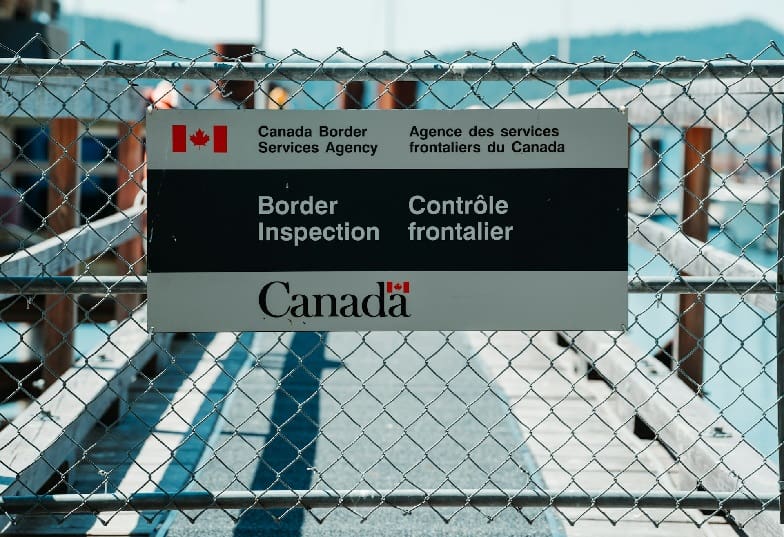
Crimes That Will Make You Inadmissible to Canada
Under Canadian law, someone who has committed or been convicted of serious criminality will likely be denied entry to Canada. Many offences in the Canadian criminal code may make an individual inadmissible to the country.
The following are just some of the crimes that may prevent a Canadian visa being issued:
- Driving under the influence of alcohol or drugs is a serious offence in Canada. Anyone with a DUI conviction can be considered criminally inadmissible
- Fraud covers a range of offences which intend to deprive another party of something they rightfully own. This may be an organization or an individual. Theft is the most commonly known form of fraud
- Assault, whether verbal or physical, can cause someone to be considered inadmissible to Canada. Serious assault involves bodily harm and/or using a weapon, while non-serious assault involves neither but is still considered a crime. The latter may involve threatening language or gestures
- Drug offences can range from possession, consumption, production or distribution, and the seriousness of the offence will be determined by which of these crimes has been committed
- Reckless driving is considered a serious crime and is treated the same as driving while under the influence of alcohol or drugs
- Organized criminal activity or membership of any organization known to engage in organized crime
- Gross human rights violations, war crimes or crimes against humanity
- International rights violations
If someone is considered a security threat they will be inadmissible to Canada. Reasons for this type of inadmissibility are:
- Espionage or spying
- Attempts to subvert a government
- Terrorism
- Being a member of any organization that is involved in these types of activity
Consequences of Being Inadmissible
The consequences of being inadmissible to Canada can have short and long-term implications.
In the short term, if someone is denied entry to Canada, this can have repercussions on their ability to study, join family members or even pass through the country on their way to another destination.
If you are already in the country, have obtained citizenship or hold a Permanent Resident Visa and are later found inadmissible, you may be removed and deported from Canada.
In the future, someone found inadmissible to Canada may be banned from returning to the country for a certain period.
The Process of Determining Inadmissibility
Under the Canada Immigration and Refugee Protection Act, a non-Canadian citizen who has past criminal convictions will be deemed inadmissible to Canada.
To determine if someone is inadmissible to Canada, the crime they committed in another country is compared to its equivalent in Canadian law.
The Canadian criminal code is complex and crimes are divided into three categories, summary, indictable and hybrid offences.
- Summary offences are the least serious
- Indictable offences are the most serious
- Hybrid offences can be processed as either summary or indictable, depending on what the offender’s actions were
When you apply for a Canadian visa or an Electronic Travel Authorization (eTA), or when you arrive in the country, a Canadian immigration officer will decide if you are allowed to enter the country.
The eTA or visa application will ask if you have a criminal record. If you answer yes, you may need to provide a Police Certificate as part of your immigration paperwork.

How to Overcome Inadmissibility to Canada
So, what happens if you are denied entry to Canada? Fortunately, there are options to overcome criminal inadmissibility. They are:
Temporary Resident Permit
Someone who is deemed criminally inadmissible to Canada may still enter the country if they have a valid reason for doing so by applying for a Temporary Resident Permit.
Despite its name, the Temporary Resident Permit can allow someone to remain in Canada for up to three years depending on the reason for entry. This period can be extended from within Canada.
The Temporary Resident Permit application is not dependent on a certain amount of time passing since the offence was committed and may be suitable for the following:
- An individual is convicted of an offence outside of Canada that is equivalent to an indictable offence under Canadian law
- The individual commits a crime outside of Canada that under Canadian laws would be considered a hybrid offence
- A person commits two crimes which Canada considers summary offences
If the holder of a Temporary Resident Permit commits a crime while in Canada, the permit may be revoked and render the person inadmissible.
Criminal Rehabilitation Application
Criminal rehabilitation is a way of gaining permanent clearance of a criminal record to allow someone to enter Canada. To be eligible for criminal rehabilitation the following must apply:
- The person committed an act in another country that under the Canadian criminal code constitutes an offence
- They admitted to or were convicted of committing the act
- A period of five years must have passed since the sentence was completed
If a foreign national or a permanent resident of Canada is convicted in Canada of an indictable offence with a maximum punishment of at least 10 years in prison or is given a jail term of at least 6 months for a hybrid offence, they may be considered criminally inadmissible and removed from the country.
Outside Canada, anyone convicted of a crime which is equivalent under Canadian law to an indictable or hybrid offence with a maximum sentence of at least 10 years is also considered inadmissible to Canada.
All of this is taken into consideration when someone submits a criminal rehabilitation application.
The process is divided into two types, deemed rehabilitation and individual rehabilitation.
Deemed Rehabilitation
When convicted in another country of a crime that in Canada is classified as an indictable offence punishable by less than 10 years in prison, an individual can be considered to have been rehabilitated if they meet certain requirements.
- 10 years must have passed since they completed their prison sentence
- They must not have committed any summary or indictable offence in the last 10 years or more than one summary offence in the preceding decade
- Within the last 10 years, they must not have been convicted in another country of an act that if committed in Canada would be considered an indictable crime or committed a summary offence in the preceding 10 years
Where someone has been convicted outside Canada of two equivalent summary offences under Canadian law:
- Five years must have passed since they completed their sentence
- They must be free of any indictable or summary conviction in Canada within the previous five years or not committed more than one summary offence in the preceding five years
- In the last five years, they have not been convicted outside Canada of the equivalent of an indictable crime or more than one summary offence in the preceding five years
A person who commits an act outside Canada which is equivalent under the Canadian criminal code to an indictable offence with a punishment of less than 10 years must meet the following requirements to be deemed rehabilitated:
- 10 years have passed since they completed their sentence
- They have no convictions in Canada of indictable or summary offences within the last 10 years or more than a single summary offence in the 10 years before that
- In the last 10 years, they have not been convicted in another country of a crime which is equivalent to an indictable offence in Canada or more than one summary offence in the preceding 10 years
Any foreign national with a criminal conviction who wishes to visit Canada should ensure that they have been deemed rehabilitated before applying for a visa or eTA.
If in doubt, contact IAS on +1 844 312 4979 to discuss your situation and let our immigration experts guide you through the process of applying for entry to Canada.
Individual Rehabilitation
Someone who has been convicted of serious criminality will not be deemed rehabilitated merely because of the passage of time. Therefore, those with these kinds of criminal records will need to apply for individual rehabilitation.
This is a formal application process which individuals must conduct through their Canadian consulate.
To apply for individual rehabilitation it’s necessary to wait five years after completion of the imposed sentence including any probation. You may also need to demonstrate your rehabilitation by having a stable lifestyle and showing that the offence was an isolated mistake in your past.
The cost in 2024 of an individual rehabilitation application is:
- C$229.77 for those who are inadmissible on the grounds of criminality
- C$1,148.87 for inadmissibility on the grounds of serious criminality
Fees are not refundable even if your application is unsuccessful and applications can take up to a year to process.
Legal Opinion Letter
A legal opinion letter is a document drafted by an immigration lawyer that sets out the details of the charges or convictions as they relate to the law in Canada. It analyses the situation, identifies risks and states the consequences of the individual being deemed inadmissible to Canada.
Criminal inadmissibility can have serious repercussions for someone whose profession requires them to travel frequently to Canada. If someone who lives in Canada has an inadmissible family member, this can place severe strain on the family relationship.
Record Suspension
For those who have committed a crime in Canada, it is possible to apply for a record suspension or pardon. If successful, this means your criminal records will be removed from the Canadian police database and criminal inadmissibility will no longer be an issue.
If a discharge for a conviction in another country is granted, you must check whether this will be acceptable under the Canadian Immigration and Refugee Protection Act and if you will be allowed to enter Canada.
Pardons granted outside of Canada do not automatically alleviate criminal inadmissibility and assuming so may result in you being refused entry at the Canadian border.
How Can IAS Help?
The Canadian immigration process is complex and when combined with overcoming inadmissibility on any grounds, it can seem overwhelming. Whether you are dealing with transborder criminality, medical conditions that make you inadmissible or a past arrest that does not allow you to enter Canada, we are here to help.
Criminal inadmissibility is a considerable hurdle but it doesn’t have to be insurmountable. With the right help and guidance from the experienced lawyers at Immigration Advice Service, you may be able to enter Canada even with a criminal history.
Call us today on +1 844 312 4979 or message us online and tell us how we can help you with your eTA, visa or issues related to criminal inadmissibility. Our team of immigration experts can guide you through your application and answer any questions you may have.
We also assist other sectors, including Agriculture, Pharmaceutical, Art, Financial Services, Technology, Dental, Sports, Fashion, Military, Aviation and many more.
Table of Contents
Table of Contents will appear here.
Get clear, professional guidance for your immigration case.
Call us to discuss your case on +44 (0)333 414 9244.

Legal Disclaimer
The information provided is for general informational purposes only and does not constitute legal advice. While we make every effort to ensure accuracy, the law may change, and the information may not reflect the most current legal developments. No warranty is given regarding the accuracy or completeness of the information, and we do not accept liability in such cases. We recommend consulting with a qualified lawyer at Immigration Advice Service before making any decisions based on the content provided.
Frequently Asked Questions
UK cautions are given for minor crimes and are not criminal convictions. The offender must agree to the caution and admit to the offence. Cautions are unlikely to mean you will be found inadmissible to Canada. A conditional caution has certain restrictions and rules which must be followed. If they are not, you may be charged with a crime which could make you criminally inadmissible to Canada.
For the purposes of immigration to Canada, a suspended sentence is considered a conviction and under the Canadian Immigration and Refugee Protection Act will render the offender inadmissible.

What our clients are saying



We are the UK’s leading immigration specialists

IAA Accredited UK Immigration lawyers

We’ve had over 25,000 applications approved

We are open Mon–Fri, 8:30am–8pm & Sat–Sun, 10am–4pm.
How our UK Immigration Lawyers can help
At the Immigration Advice Service our lawyers specialise in a wide range of UK visas, nationality and asylum applications and have represented clients in various successful complex and high-profile cases.
Get in Touch

Head Office:
Immigration Advice Service
Ashwood House, Ellen Street
Oldham, OL9 6QR, United Kingdom

Head Office Phone:
+44 (0)333 414 9244
We have over 12 offices across the world, find a branch near you.
Call us now at +44 (0)333 414 9244 or request a call back using the form below.
Related pages for your continued reading






In the news