
UK Visitor Visa Refused? Get Expert Advice or Help With Your New Application
The UK Immigration Office can refuse a UK Visitor Visa application for certain reasons. If your visa application was denied, there are some things you can do about that.
For more information about the UK Visitor Visa, including how to apply and expert advice on what to do after a refusal, reach out to us today on +44 (0)333 414 9244 or contact us online.
Read our 1983 reviews
Request a call back from our immigration experts
Why Do UK Visitor Visa Applications Get Refused?
A UK visitor visa refusal is a decision by the Home Office that an applicant hasn’t met the requirements of the Standard Visitor route under Immigration Rules Appendix V — most commonly the ‘genuine visitor’ test.
According to the Home Office, 2.2 million visitor visas were granted in the year ending March 2026 — but refusal is concentrated by nationality and evidence quality, not evenly spread. This is because many people who apply do not meet the requirements to get their visas approved.
Getting a visa refusal can be hard to take, considering the amount of time and resources poured into making an application. But all hope is not lost as there are things you can do in the incident of a visitor visa refusal. The first is to consider and understand the UK visitor visa refusal reasons before taking further steps.

UK Visitor Visa Requirements: Is It Right for You?
If you want to visit the UK for business, tourism, and study (for no more than 6 months), you will need a UK Visitor Visa. This visa grants you the right to stay in the UK for up to 180 days. This is also the visa you will need if you are coming to visit family and friends in the UK.
You cannot work or claim public benefits as a UK visitor visa holder. You cannot also get married. If you want to get married, you’ll have to apply for a Marriage Visitor visa. If you also want to study longer than 6 months, you’ll have to apply for a Study visa. If you are in transit, you can apply for another kind of visitor visa called a Visitor in Transit visa.
To get your UK visitor visa approved, you must prove that:
- you’ll leave the UK when your permit expires
- you’re financially capable of supporting yourself (this includes paying for accommodation) and your dependents, if any. Alternatively, you can show that the person you’re visiting can house and support you throughout your stay.
- you’ll not make frequent visits to the UK
- you can pay your fare to and from the UK
Common UK Visitor Visa Refusal Reasons 2026
There are many reasons why the Home Office can refuse an application for a UK visitor visa. UK Immigration laws back these reasons. The Home Office approves or refuses a UK visitor visa based on each applicant’s suitability. If any applicant fails the suitability test, their visa application is refused.
The Home Office refuses visas because of the applicant’s lack of funds, lack of evidence to prove the purpose of the visit, lack of ties to the home country, criminal record, previous refusals, submission of false information, and on health grounds.
- Insufficient Funds or Bank Statements
- Lack of Ties to Your Home Country
- Failing the “Genuine Visitor” Test
- Criminal Record or Immigration Offences
- A Previous Visa Refusal on Your Record
- False or Misleading Information
- Health Grounds (TB Test — Rarely Applies to Visitors)

Insufficient Funds or Bank Statements
Immigration Rules Appendix V doesn’t set a minimum amount — under paragraph V 4.3, you simply need funds sufficient for the reasonable costs of your specific trip. You’ll also need to show you can support any dependent going with you.
You’ll have to show you have no issues feeding, paying for accommodation, and flying to and from the UK. This proof of funds counts in convincing the Home Office that you’re not coming to the UK to work.
You can prove that you have enough funds to take care of yourself by submitting bank statements. Alternatively, a third party (the person you’re visiting) can write to the Home Office promising to be responsible for you. If you use a third party, you must prove to the Home Office the relationship between you and your sponsor.
Lack of Ties to Your Home Country
The UK immigration officials want to be sure you’ll return to your country when your visit ends. Failure to prove that you intend to return home will result in visa refusals. You must show evidence of your ties to home by showing employment or admission letters.
You can show that you have a business or property in your country. It is also permissible to show you have some responsibilities that will take you home, like your family, marriage, or royal duties.
Failing the “Genuine Visitor” Test
Under Immigration Rules Appendix V, paragraph V 4.2, the Home Office must be satisfied you are a ‘genuine visitor’ — meaning you will leave the UK at the end of your visit, won’t live here through frequent visits, and are visiting for a permitted purpose.
If the immigration officer cannot determine why you are going to the UK, your application will be refused. The Home Office needs to be sure you are coming for tourism, a visit, business, or a short stay.
Criminal Record or Immigration Offences
One of the major UK visitor visa refusal reasons is a record of a criminal offence(s). Under Part 9 of the Immigration Rules (General Grounds for Refusal), a custodial sentence of 12 months or more will normally result in refusal, with different thresholds for shorter or non-custodial sentences.
If you have once overstayed during your visit to the UK or have been deported for breaking immigration laws, the Home Office will refuse your visa application.
Again, if you have a travel ban, your application will be refused until the tenure is served.
A Previous Visa Refusal on Your Record
Getting a UK Visa application approved is usually harder when there has been a refusal.
False or Misleading Information
Each application that comes to the Home Office is properly evaluated for suitability. So, if there is false information about you on your application, it will be detected, and your visa application will be refused. Bank statements or other supporting documents and marriages are the most common things applicants falsify.
Health Grounds (TB Test — Rarely Applies to Visitors)
Most Standard Visitor applicants don’t need a TB test — it only applies to stays over 6 months, or fiancé(e) and Returning Resident applications.
What to Do If Your UK Visit Visa Is Refused?
If your UK visitor visa is refused, you will get an email stating that your application was unsuccessful. The notice will also tell you why. It will also offer you options on what you can do to get a favourable response.
If you get the refusal email, there are some options you can explore. For example, you can appeal the decision, review the decision or reapply for the visa after addressing the reasons why the initial application was refused.
Here’s what to do:
- Appealing the Decision
- Review the Decision
- Reapply for UK Visitor Visa After Rejection
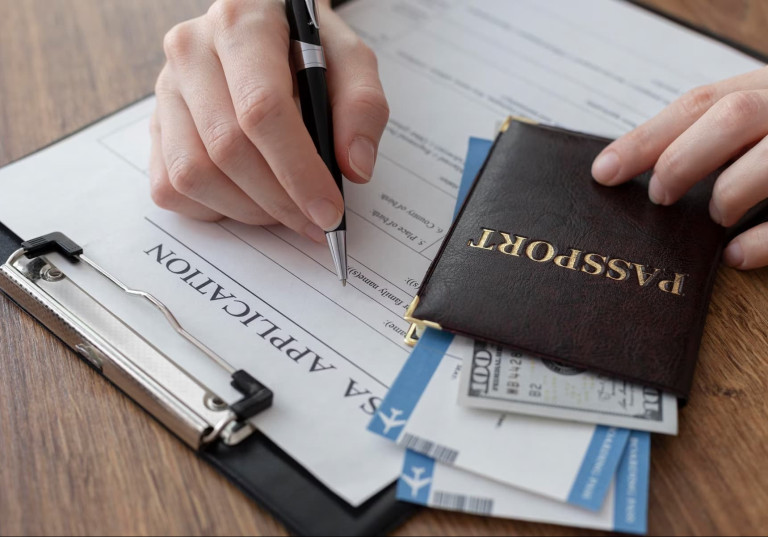
Can You Appeal? Human Rights Grounds Only
Visitor visa refusals lost their general right of appeal when the law changed in 2013 — today you can only appeal if the refusal breaches your human rights, which is rare for visit visa cases. But that can only be possible if the refusal contravenes human rights laws. You are usually told if you can appeal the decision in your refusal letter or email.
Usually, you have 14 days to appeal the decision if you’re in the UK and 28 days if you’re outside of the UK.
Note that the only time UK immigration rules can accept an appeal based on human rights claims is when the refusal affects family life. For example, a parent applying to visit their child who was separated from them due to war. Another example is a child who is going to visit an aged and sick parent who cannot move around on their own.
If the refusal interferes with family life, then you can appeal it.
Appealing a decision is a tedious process, even more tedious than the initial application. First, to appeal a decision, you must submit all the documents you used to apply for the visa. Then you draft the reason why you are appealing the decision.
Next, fill out a form and pay £144 if you want a hearing or £82 if you don’t (fees updated July 2026). Then send the form to the Immigration tribunal and wait for the tribunal to call your hearing. This usually takes 8 weeks. During this time, you are supposed to gather all evidence and documents you’ll need to defend your application.
If you are in the UK, you can attend the court case, but your lawyer can stand in for you if you are not. You will get the response to your appeal via mail or through your online portal.
If the process is too complicated for you or if you need help clarifying the complexity of your refusal, don’t hesitate to contact an immigration lawyer for guidance. Call us on +44 (0)333 414 9244, or contact us online today.
Judicial Review of a Visa Refusal
You can ask for a review of your UK visitor visa refusal if you feel and can prove the refusal broke UK immigration laws. This process is also called judicial review and can take longer than an appeal.
You can also ask for a review if there was a mistake in the decision-making process. For example, you submitted a TB test certificate, but somehow the ECO missed it and refused your application.
Here are the steps required to get a Judicial review:
Sending a Pre-Action Protocol (PAP) Letter
A Pre-Action Protocol Letter, also known as a ‘letter before claim’ or ‘letter before action’, is a written notification to the Home Office. Before going ahead with judicial review proceedings, the visa applicant must send this letter to the Home Office, to inform the latter of their intention to challenge a decision or action made by the department.
As part of the Pre-Action Protocol, the judge expects both parties (i.e., the applicant and the Home Office) to have exchanged enough information before court proceedings, so that both parties may understand each other’s position clearly and try to resolve the issue without court involvement.
So, your letter before claim must provide sufficient details regarding why you believe the Home Office was wrong or unlawful in refusing your visa. A well-drafted letter that clearly sets out the legal grounds for challenging the Home Office’s decision can actually salvage your case.
In the R (Shajna Begum) v Entry Clearance Officer case (JR-2024-LON-003343) where the Home Office refused a visitor visa multiple times, the Upper Tribunal judge noted that the concerned caseworker(s) just issued repetitive, formulaic refusals completely overlooking the applicant’s detailed explanations shared in their PAP letters.
The judge was, in fact, satisfied on balance that the second PAP letter sent by the applicant in February 2024 was not considered by the Home Office caseworker(s) and that this failure amounted to a public law error. This example fairly illustrates how a strong PAP letter can go a long way to overturn a visa refusal decision.
Once this letter is issued, the Home Office has 14 days to respond. If they don’t respond or maintain their position on the decision, the applicant can request judicial review.
You will be penalised if you file your request for judicial review without filing a pre-action protocol letter. Sending a Pre-Action Protocol letter has no official fee, but the Upper Tribunal’s judicial review application currently costs £174. We can help you maximise your success with a well-thought-out pre-action protocol letter from our lawyers. Get in touch today.
The Judicial Review Application
When the applicant applies for judicial review, the Upper Tribunal assesses the application. If they see a case, then there would be a judicial hearing. If the Upper Tribunal rejects the application, the applicant can apply for a hearing at the Upper Tribunal.
Reapplying After a UK Visitor Visa Refusal
This is the easiest way to handle UK visitor visa refusal. The mail conveying your visa refusal spells out what caused the rejection. And this is exactly the tip you need to reapply. Once you correct all the issues raised by the Home Office, you can submit a new application.
You could reapply if the visa was rejected based on insufficient proof of funds. But this time with a bank statement (s) containing more money than you originally submitted.
Your chances of getting your visa approved drop with each rejection. So, you must submit a tight application for the second time. Ensure you address all the issues raised by the Home Office before applying again to avoid wasting resources.

How Soon Can You Reapply After a UK Visit Visa Refusal?
There is no set time when you can reapply for a UK visitor visa. But it is essential to reapply when you have met all the suitability requirements. If your application was rejected before, then whatever you present again must be stronger.
Include additional documents that can prove that:
- you can sustain yourself in the UK. This can be done by submitting your bank statements or getting your host to undertake for you.
- show evidence of how you are tied to your country. For example, you can show an employment letter, school admission letter, or proof of your business.
- provide your travel itinerary. Here you can show the Home Office the hotel you have booked, your return ticket proving you will be leaving the UK after your visit, and places you hope to tour.
Once you get these together, you can reapply again.
UK Visa Refusal Rates by Nationality (Home Office Data)
Yes, refusal rates vary by nationality. While every application is considered individually and without bias, some nationals tend to have higher visa refusal rates than others. This is usually because of the history the citizens of those countries have with immigration rules.
There are some countries whose nationals have a high and unwanted record of breaking immigration rules. These rules range from overstaying, working when they are not supposed to, or longer than permitted and applying for a visa without sufficient funds.
Applications from citizens of these countries with bad immigration records are usually subjected to more rigorous scrutiny. Also, citizens of poor, war-torn countries have more to prove than citizens of wealthy and peaceful nations.
Citizens of the UAE (99.4%), Oman (98.2%), Kuwait, Qatar, Saudi Arabia and South Africa have the highest approval rates. Citizens of Chad (29%), Botswana (32%), East Timor, Algeria and Benin have the lowest.
If you are a citizen of these countries with low approval rates, you have to go the extra mile to prove the genuineness of your application.
This is done by proving beyond doubt that:
- you’re visiting the UK purely for business or leisure purposes and not for work
- you’ll exit the UK once your permit duration ends
- you’re capable of supporting yourself and any of your dependants during your stay
- you’re capable of paying for any other cost you’ll incur while visiting.
It is also essential to ensure that all the information you provide the Home Office is accurate and comprehensive. Your application will be refused if there are errors, falsifications, or unverifiable details.
How IAS Can Help With Your Visa Refusal?
No one smiles at the face of visa application rejection because of the time, energy, and resources it takes to prepare an application. But don’t lose heart if you applied for a UK visitor visa and it was refused.
We have competent lawyers at IAS with years of experience and are well-versed in UK immigration laws. In addition, we are experts in dealing with UK visit visa rejections.
Sending a PAP letter, exploring the alternative dispute resolution options, or asking for a judicial review challenging the legality of the Home Office decision, all demand extensive legal knowledge and expertise, and hands-on experience in handling UK immigration and visa refusal cases.
This is definitely not a journey you should take alone. Acting without proper advice or trying to navigate the complex web of immigration law all by yourself can quickly turn into a disastrous affair.
Our expert and experienced UK immigration lawyers and caseworkers can provide end-to-end legal support with the Pre-Action Protocol process to ensure you remain compliant with the protocol. We can also guide and prepare you for a judicial review if your case ultimately goes to court.
No matter how complex your situation is, IAS can help you. Our team will help you assemble an exceptional case and represent you whether you are in or out of the UK. We can also help you build a robust application should you want to reapply.
For more information about how we can help you or if you’d like to speak with one of our immigration lawyers, call us on +44 (0)333 414 9244 or contact us online today.
Table of Contents
Table of Contents will appear here.
Legal Disclaimer
The information provided is for general informational purposes only and does not constitute legal advice. While we make every effort to ensure accuracy, the law may change, and the information may not reflect the most current legal developments. No warranty is given regarding the accuracy or completeness of the information, and we do not accept liability in such cases. We recommend consulting with a qualified lawyer at Immigration Advice Service before making any decisions based on the content provided.
Services we Provide




Frequently Asked Questions
An MP can write to the Home Office to support a visitor visa application. However, this does not make your application stand out in any special way. The visa will still be rejected if your application has other irregularities, irrespective of the MP’s input.
You can contact your MP if you applied for a visa and it takes too long for the Home Office to respond. Your MP can wade the bureaucratic waters easier and faster and determine the delay.
You do not need travel medical insurance to apply for a UK visitor visa. However, the Home Office advises that applicants always take out medical insurance, especially if they have pre-existing health conditions.
The UK visitor visa application fee will not be refunded if your application is refused. This is because the fee you pay is what the Home Office uses to process your application and verify your documents.
UK visitor visas are most often denied because the Home Office isn’t satisfied the applicant is a ‘genuine visitor’ under Immigration Rules Appendix V, paragraph V 4.2 — usually due to insufficient funds, weak ties to their home country, or an unclear purpose for the visit.
A refusal happens before a visa is granted, when an application doesn’t meet the requirements. A cancellation happens after a visa has already been issued, typically when the Home Office finds the holder no longer meets the conditions it was granted under.
Yes. You must disclose any previous refusal on later applications, and it can prompt closer scrutiny of your evidence — though it doesn’t automatically cause a second refusal if the original issues are properly addressed.

Related Posts
Belgium: Flanders Introduces €180 Single Permit Fee
Last modified on September 17, 2026 at 3:37 pm
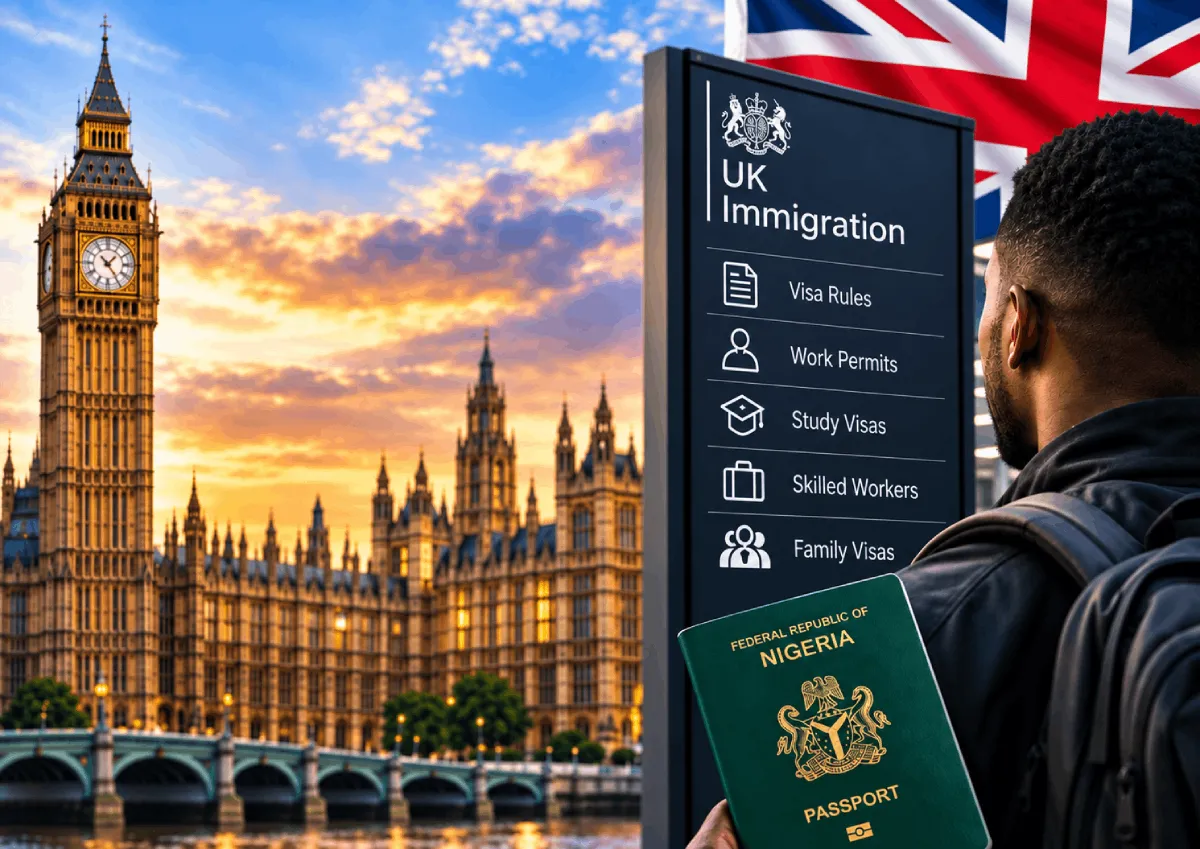
The UK Is Tightening Its Immigration Rules — What Nigerians Need to Know Before 2027
Last modified on September 18, 2026 at 10:29 am

France Tuition Fees 2026–2027: What Non-EU Students Need to Know
Last modified on September 17, 2026 at 3:27 pm

Brazil Introduces Electronic Temporary Visas: Who Can Apply?
Last modified on September 16, 2026 at 4:46 pm

US Green Card Update: Public Charge Changes and September Visa Limits
Last modified on September 16, 2026 at 4:20 pm
Canada to Replace Start-Up Visa with High-Impact Entrepreneur Route
Last modified on September 14, 2026 at 11:31 am
US Plans to Scrap 60-Day Grace Period for H-1B Visa Holders
Last modified on September 11, 2026 at 9:15 am

How Much Money Do You Need to Move to Spain?
Last modified on September 14, 2026 at 12:14 pm

Modern Slavery Victims Can Now Leave Their Employers
Last modified on September 4, 2026 at 3:19 pm