
The Best Countries to Live In
Looking to relocate to another country? These are the best countries in the world to live in, based on their quality of life, job opportunities and other factors.
IAS can help take the stress out of international immigration and visas. Call one of our advisers on +44 (0)333 414 9244 or reach out to us online today.
Read our 1983 reviews
We have helped over 25,000 people get their visas approved the first time
Complete the form below to request a call back

What Country Should I Move To?
When asking yourself what country you should move to, you should consider factors such as the country’s quality of life, how easy it is to immigrate there, job opportunities, and the country’s economy.
You should also consider the country’s culture, politics and society and how well it might fit your lifestyle.
For example, if you’re from a European country, it is more likely that you’ll find it easier to settle in to another European country than you would do moving to South East Asia.
Ultimately, which country you should move to should combine both practical and personal factors, including which country suits you and your family’s needs and which one you would personally feel most comfortable in.
In this article, we’ll run through some countries that are often ranked as the best in the world to live in to help give you an idea for your next international move.
Canada
Canada is consistently ranked as the most desirable country for foreigners to want to move to, which is unsurprising given its beautiful scenery, bustling metropolitan cities and historically welcoming attitudes to immigrants.
Cost of Living
Canada does have a relatively high cost of living compared to other countries, currently sitting in the 12th highest position on Numbeo’s overall ranking of the cost of living in countries for 2024.
Below are some key statistics for cost of living in Canada, also according to Numbeo:
| Amenity | Cost (in USD) |
| Basic monthly utilities | $145.32 |
| Rent for 1 bedroom city centre apartment | $1,319.48 |
| Rent for 1 bedroom apartment outside of city centre | $1,185.72 |
| Purchase price for city centre apartment (per sq m) | $6,910.70 |
| Purchase price for apartment outside of city centre (per sq m) | $4,826.83 |
| Average monthly living cost for single person (without rent) | $1,025.5 |
| Average monthly living cost for family of four (without rent) | $3,688.3 |
Note that similar to many other countries, the averages shown here may skew slightly higher than normal given the large difference of the cost of living between rural areas and large cities. Cities such as Toronto, Vancouver and Montreal will have significantly higher costs of living than smaller towns in less densely populated areas.
Ease of Immigration Process
Canada has multiple pathways for people looking to immigrate there.
One of the most popular is the Express Entry series of pathways, which allows skilled workers or those with experience of working in Canada to obtain permanent residency status.
However, you will be ranked against other applicants using the Comprehensive Ranking System, which assesses your suitability for immigration by giving you a numerical score based on your skills, experience, qualification and personal situation.
This may make it difficult for candidates to immigrate via this route if they don’t meet the basic criteria to accrue enough points.
Alternatively, there are Provincial Nominee Programs, which allow you to be nominated by a Canadian province to immigrate there and attain permanent residency status. These programs often have unique criteria and often require you to fulfil some sort of labour market need for that province.
There are also routes for self-employed individuals, business owners, or those who already have family in Canada.
Applications for permanent residence can take up to 6 months or a year to process and will typically cost upwards of around $1,000 USD.

Attitude to Immigrants
Canada has historically had a largely welcoming and positive attitude to immigrants, with numerous international communities being able to make their home in Canadian towns and cities.
Some sources have even deemed Canada the “world’s friendliest city” based on its warm and inviting attitude towards foreigners.
For this reason, it is likely that foreign nationals will have a relatively easy time settling into Canada, particularly in its larger cities, which tend to be more multicultural than more rural areas.
Quebec in particular is one of the most immigrant-friendly areas of Canada, given that it is the centre of Canada’s Francophone communities.
Settlement and Citizenship
As previously mentioned, many Canadian immigration programmes allow you to quickly obtain permanent residency status, which can be a great option for those looking to put down roots as soon as they arrive in the country.
Canadian citizenship can be obtained once you’ve obtained permanent residency status and spent at least 3 of the past 5 years living in Canada.
You must also prove your English or French language skills and pass a citizenship test.
Canada allows its citizens to hold dual citizenship, which means you will not have to surrender your original citizenship of your home country to become a Canadian citizen.
Job Opportunities
Canada has various job opportunities in sectors such as sales, healthcare, education, social care and education.
Some Canadian immigration pathways require you to have a job offer secured before applying for immigration. For example, some PRovincial Nominee Programs will only specifically look for applicants working in certain professions in order to fill gaps in the local labour market.
Some of the most in-demand jobs in Canada as of 2024 include nurses, web developers, engineers, truck drivers and accountants.
Economy and Politics
Canada has the 10th largest economy in the world, with a diverse mix of international trade, import and export. Real estate and manufacturing make up a large percentage of Canada’s economy, as well as mining.
Canada’s overall economy has been historically stable, with the Canadian government reporting in 2024 that the economy is actually growing, outpacing expectations.
Politically, the Liberal Party has had a majority in the Canadian government since 2015, with Justin Trudeau leading. The party is generally described as sitting at the centre or centre-left of the political spectrum and has implemented policies such as legalising same-sex marriage, expanding access to abortion and increasing the number of immigrants accepted into Canada after the Covid-19 pandemic.
Denmark
Denmark consistently ranks as a country with one of, if not the highest, quality of life in the world. May rank Denmark as a country representing the best of what Europe has to offer in terms of food, culture, ease of living and scenery. Denmark also ranks highly in terms of work/life balance and has a strong state and welfare system.
Cost of Living
Of the countries in this article, Denmark does have the highest relative cost of living, sitting in 7th highest place in Numbeo’s overall ranking of countries for cost of living.
Below are some key statistics for cost of living in Denmark, also according to Numbeo:
| Amenity | Cost (in USD) |
| Basic monthly utilities | $218.05 |
| Rent for 1 bedroom city centre apartment | $1,142.25 |
| Rent for 1 bedroom apartment outside of city centre | $897.39 |
| Purchase price for city centre apartment (per sq m) | $5,475.41 |
| Purchase price for apartment outside of city centre (per sq m) | $3,766.19 |
| Average monthly living cost for single person (without rent) | $1,162.4 |
| Average monthly living cost for family of four (without rent) | $4,164.8 |
Denmark is a densely-populated country, where property can sometimes come at a premium in the busiest areas. However, areas such as Southern Zealand, Langeland, and the southern islands can represent better value for money in terms of property, though the quality and availability of amenities may be less good there than in busier areas.
Ease of Immigration Process
Denmark is a member of the EU, which means that any other EU citizen can legally move and settle there without restriction. However, you must register for permission to do so from the Danish government, as well as meet eligibility criteria for the type of residence you wish to apply for (e.g. as a worker, self-employed person, self-sufficient person, etc).
If you’re not an EU citizen, you will first need to apply for a residence and/or work permit.
There are a variety of work permits available for foreign nationals, including a fast track scheme if you’ve already been offered a job by a Danish company and are eligible for one of the five streams.
There are also dedicated schemes for researchers, those who work in special individual professions, business start-ups and those working in shortage professions.
The Danish immigration system can be said to be difficult to navigate, with stringent rules and requirements. For example, most routes will require you to earn at least a certain minimum salary threshold, or work in a specific field that is in demand in Denmark. For this reason, you should ensure that you fully meet all necessary requirements before applying.
Applications for residence and/or work permits can normally take around a month to process, and will typically cost around $950.
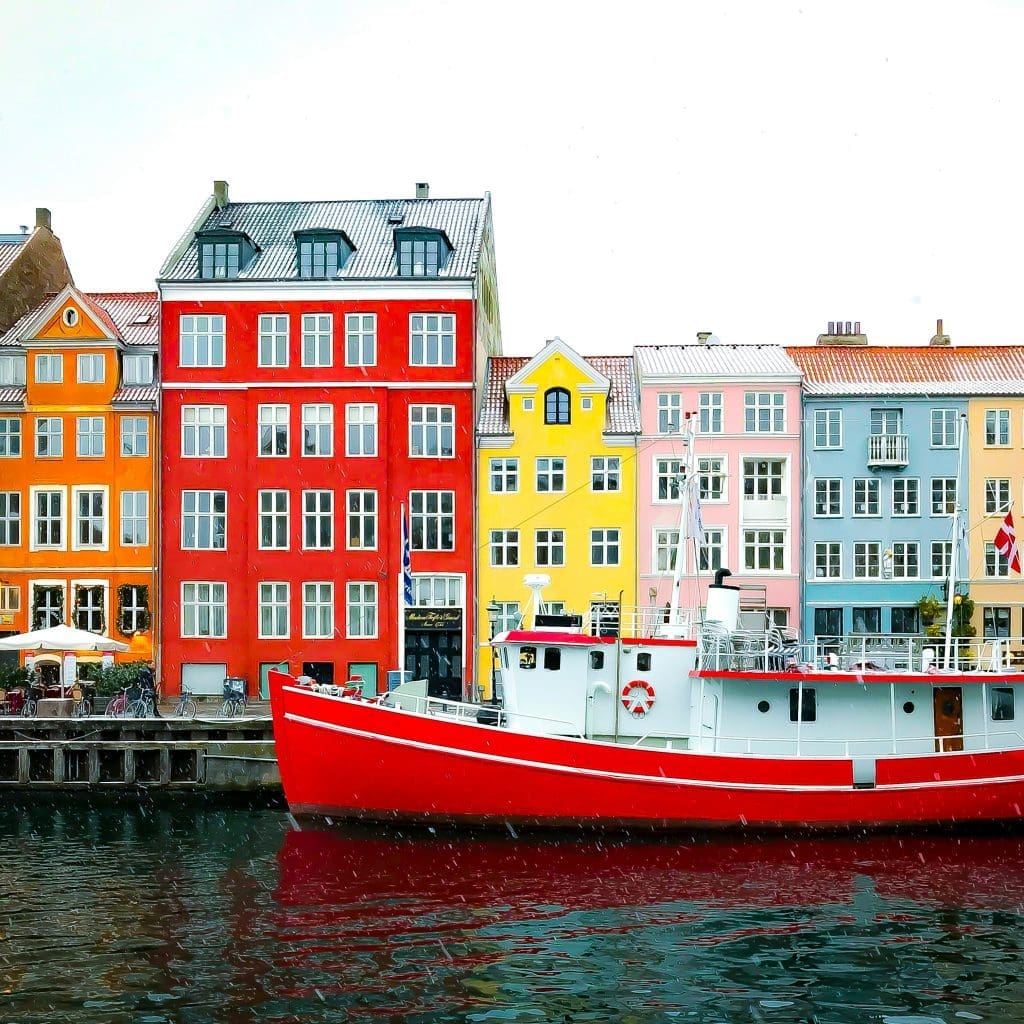
Attitude to Immigrants
Denmark is largely very friendly to foreigners and immigrants, although expats may face some challenges when settling there.
Some people may find it difficult to fully feel integrated into Danish society without first learning the language, despite the fact that many Danes are also fluent in English.
Danes also place relative importance on local cultural customs and norms, which may be challenging for some people attempting to fully fit in with locals. However, making an effort to learn the language and understanding the local culture may be highly beneficial in being accepted into Danish society.
Settlement and Citizenship
You can normally apply for permanent residence after spending 8 years living in Denmark with a valid permit (or after 4 years in some cases).
After 2 years with a permanent residence permit, you will be eligible for Danish citizenship.
You must also take a Danish language test, a citizenship test and prove that you have been in employment for at least 3 years and 6 months in the last 4 years.
Denmark allows its citizens to hold dual citizenship, which means you will not have to surrender your original citizenship of your home country to become a Danish citizen.
Job Opportunities
Denmark has a robust job market with particular emphasis on work/life balance, job security and competitive salaries relative to other European countries.
In-demand professions within Denmark include IT, engineering, marketing and sales, and healthcare.
Some Danish jobs will also specifically be English-speaking, which can be a significant benefit for those who are not yet already fluent in Danish.
Economy and Politics
Denmark has a strong economy, with GDP expected to rise by 2.4% in 2024 overall. Employment figures are also expected to grow from 2025 onwards, with relatively low inflation figures compared to the rest of Europe.
The current ruling political party of Denmark is formed of a coalition between three parties: the Social Democrats, Venstre and the Moderates. Its current Prime Minister is Mette Frederiksen, and the government is broadly described as centrist and right-of-centre.
Australia
Offering warm and sunny climates, stunning stretches of coastline and a unique geographical position to explore the Pacific and Asia, Australia has always been a highly popular choice for many to settle in.
Cost of Living
Australia ranks 10th in Numeo’s overall ranking of countries by cost of living, though like Canada, there may be a significant disparity between those who live in cities and those in rural areas. However, the vast majority of Australians live in cities and urban areas.
Below are some key statistics for cost of living in Australia, also according to Numbeo:
| Amenity | Cost (in USD) |
| Basic monthly utilities | $192.60 |
| Rent for 1 bedroom city centre apartment | $1,432.10 |
| Rent for 1 bedroom apartment outside of city centre | $1,132.01 |
| Purchase price for city centre apartment (per sq m) | $6,899.93 |
| Purchase price for apartment outside of city centre (per sq m) | $5,037.22 |
| Average monthly living cost for single person (without rent) | $1,064.6 |
| Average monthly living cost for family of four (without rent) | $3,770.2 |
The largest barrier some people may face when moving to Australia is the relatively high cost of housing compared to other countries, particularly in Sydney and Melbourne. However, the Federal Government have stated their intention to build hundreds of thousands of new affordable homes over the next few years.
Ease of Immigration Process
Australia has work visa options for skilled workers who are either being sponsored by an employer or who are looking to immigrate on an independent basis.
Most of these visas operate on a points-based system, which means you will have to accrue a minimum number of points over a range of factors to be eligible to apply. Some streams may also only be open to those who are aged 45 years and under.
Alternatively, you may be eligible for a visa if you have already previously worked in a region of Australia before, or if you have family connections there. Business and investment visa options are also available, some of which can lead to permanent residence.
Visas can generally cost anything between $2,000 and $5,000 USD and are normally processed within a few months.

Attitude to Immigrants
Australia is generally welcoming and accepting of immigrants, with around 30% of the population having been born overseas.
Due to its proximity to Asia, there is a significant Asian-born population in larger towns and cities, as well as a diverse diaspora of people from Europe and the Americas. This means that foreigners are not likely to feel too isolated in Australia compared to some other countries.
Settlement and Citizenship
Permanent residence status in Australia can be obtained immediately upon being granted an eligible visa.
However, as you may expect, obtaining these visas in the first place can be difficult, with stringent checks and eligibility criteria you must first fulfil in order to be granted approval.
However, once you have obtained your visa, you will be able to live and work in Australia indefinitely, as well as sponsor other relatives to come to Australia.
To apply for citizenship in Australia, you generally must have been living there for 4 years on a valid visa. You must also be judged of good character, take a citizenship test and demonstrate your English language skills.
Australia allows its citizens to hold dual citizenship, which means you will not have to surrender your original citizenship of your home country to become an Australian citizen.
Job Opportunities
Australia has a diverse job market across the continent, with numerous roles being identified as shortage occupations, which means that applicants working in these roles may find it slightly easier to immigrate.
These include roles in engineering, healthcare, hospitality, science, accounting, managerial roles and crafting.
Certain regions of Australia may also have different shortages than other regions, which may play a part in deciding where to settle when you immigrate.
Economy and Politics
Australia is ranked as the 14th largest economy in the world by GDP, with the GDP itself having grown by around 1.5% in 2023-2024.
Australia is currently governed by the centre-left Labour Party, led by Anthony Albanese. Some of the policies they have implemented since being elected include an anti-corruption commission, amendments to Australian labour laws and improvements to foreign relations.
Sweden
Sweden boasts a high quality of life, excellent work/life balance and a friendly society with an emphasis on a relaxed pace of life and progressive social policies.
Cost of Living
Sweden ranks 25th in Numeo’s overall ranking of countries by cost of living, which is the lowest ranking of any of the countries in this article.
Below are some key statistics for cost of living in Sweden, also according to Numbeo:
| Amenity | Cost (in USD) |
| Basic monthly utilities | $108.98 |
| Rent for 1 bedroom city centre apartment | $902.52 |
| Rent for 1 bedroom apartment outside of city centre | $661.35 |
| Purchase price for city centre apartment (per sq m) | $5,084.04 |
| Purchase price for apartment outside of city centre (per sq m) | $3,253.25 |
| Average monthly living cost for single person (without rent) | $936.8 |
| Average monthly living cost for family of four (without rent) | $3,425.4 |
Compared to the other countries on this list, Sweden has relatively low cost of living, with cheaper rent, property purchase and utility prices for the most part. However, Sweden also puts a relatively high tax burden on its residents and citizens, along with Denmark, which may make Sweden a more cost-effective choice for those looking to move to northern Europe.
Ease of Immigration Process
Sweden is part of the EU, meaning that other EU citizens have the ability to live and work there without restriction and without having to apply for a residence permit.
Otherwise, for the most part, foreign nationals will have to apply for a permit before travelling to Sweden. For instance, to obtain a work permit, you must have first received an employment contract from a Swedish employer that conforms to the eligibility criteria set out by the Swedish government. The company must then apply for your permit on your behalf.
Residence permits are also available to those looking to run their own business or join a close family member in Sweden.
The application process for applying for a Swedish permit can be relatively straightforward as long as you meet all of the criteria to be eligible and follow the instructions given on the Swedish government website.
Residence or work permits cost around 200$ USD and can take up to a few months to process.
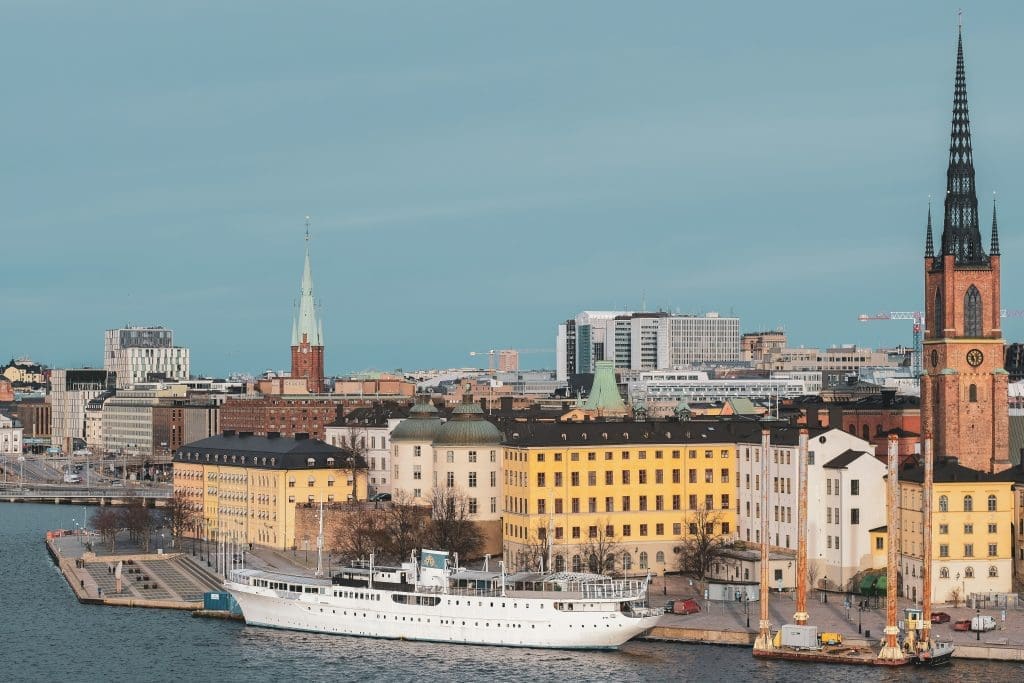
Attitude to Immigrants
Similar to many other Nordic or Scandinavian countries, Swedes are sometimes said to be fairly insular and can take a little bit of time to get to know properly.
However, learning the Swedish language can remove significant barriers to this and will likely make it easier to get to know the locals, though many of them will be able to speak English.
Aside from those points, Swedes are said to be friendly to foreigners and are tolerant of other races, cultures and religions.
Settlement and Citizenship
Individuals who have lived in Sweden for five years with a valid residence permit or any other type of legal residence can apply for permanent residency status.
To apply for Swedish citizenship, you must have lived in Sweden for a certain uninterrupted period of time (normally 5 years), have led an “orderly” life in Sweden (i.e. not have committed any crimes or have any unpaid debts and have permanent residence status.
Sweden allows its citizens to hold dual citizenship, which means you will not have to surrender your original citizenship of your home country to become a Swedish citizen.
Job Opportunities
Sweden has a large proportion of its residents working in finance and business, with Stockholm in particular being known as a vibrant business and innovation centre for Scandinavia.
Shortage occupations in Sweden include those in engineering, healthcare, butchery, dentistry and teaching.
Economy and Politics
Sweden’s economy is generally very stable, with an emphasis on key exports such as timber, iron and hydroelectricity. It is ranked 25th overall in the world according to GDP.
Politically, Sweden is currently governed by a coalition between the Moderate Party, the Christian Democrats and the Liberal Party, led by Ulf Kristersson of the liberal-conservative Moderate Party.
How Can IAS Help?
Moving to another country abroad can be a difficult and stressful experience, given that you will be uprooting yourself and your family to start afresh somewhere else.
That’s why it’s recommended to seek the help of a qualified immigration professional before doing so. This is especially the case if the country you’re moving to has strict or difficult immigration rules, which will place additional emphasis on getting your application right first time round.
IAS’ international immigration lawyers can help you with this issue and ensure that your chosen immigration route to your country can be completed to the highest standard, minimising any risk of refusals and getting your new journey off to the best start.
Call us today on +44 (0)333 414 9244 or use our online contact form to find out more about our services and what we can do for you.
Table of Contents
Table of Contents will appear here.
Legal Disclaimer
The information provided is for general informational purposes only and does not constitute legal advice. While we make every effort to ensure accuracy, the law may change, and the information may not reflect the most current legal developments. No warranty is given regarding the accuracy or completeness of the information, and we do not accept liability in such cases. We recommend consulting with a qualified lawyer at Immigration Advice Service before making any decisions based on the content provided.
Services we Provide




Related Posts

US October 2026 Visa Bulletin: What Nigerian Green Card Applicants Should Know
Last modified on October 14, 2026 at 5:06 pm

UK Introduces New Immigration Rules: What Nigerians Need to Know
Last modified on October 14, 2026 at 5:05 pm

How to Avoid PERM Suspension Like Microsoft: HR Compliance Checklist
Last modified on October 13, 2026 at 7:57 am

Your Rights While in UK Immigration Detention
Last modified on October 8, 2026 at 5:25 pm

Temporary Protection Transition Scheme Ireland
Last modified on October 6, 2026 at 2:14 pm
New Passport Rule for UK-Ireland Travel on Ferries
Last modified on October 5, 2026 at 4:22 pm

Belgium: Flanders Introduces €180 Single Permit Fee
Last modified on September 17, 2026 at 3:37 pm
The UK Is Tightening Its Immigration Rules — What Nigerians Need to Know Before 2027
Last modified on September 18, 2026 at 10:29 am

France Tuition Fees 2026–2027: What Non-EU Students Need to Know
Last modified on September 17, 2026 at 3:27 pm