New IFHP Payments, Ukrainian Concessions Extended, PGWP Programs Frozen and Other January 2026 Canada Updates
January’s Canada immigration news includes new co-payments for the Interim Federal Health Program, application extensions for Ukrainians in Canada, updates on the eligible list of programs for the Post-Graduation Work Permit and more.
For help and expert advice on your Canadian immigration issue, please contact us on +1 844 312 4979 or reach out to us online today.
Read our 1983 reviews
We have helped over 25,000 people get their visas approved the first time
Complete the form below to request a call back

Co-payments to be Introduced to the Interim Federal Health Program
Beneficiaries under the Interim Federal Health Program (IFHP) will be liable for additional co-payments under new changes to the scheme being introduced later this year.
From 1 May 2026, IFHP beneficiaries will be responsible for the following co-payments:
- $4 for each eligible prescription medication filled or refilled under the IFHP
- 30% of the cost of all other eligible supplemental health products and services, including dental care, vision care, counselling and assistive devices
Beneficiaries will have to pay fees directly to their health care providers when they receive IFHP-eligible supplemental products or services. Basic healthcare services, such as doctor and hospital visits, will continue to be covered by the IFHP as normal.
The Canadian IFHP provides limited and temporary coverage for urgent and essential health services for eligible foreign nationals until they can transition to provincial or territorial health care programs. The introduction of co-payments, according to the government, will help to ensure long-term stability for the program by managing increasing demand.
In light of these new changes being introduced, the government are requesting that IFHP beneficiaries do the following:
- Continue to choose a health care provider registered under the IFHP using the IFHP Provider Search tool
- Ask their health care provider whether a co-payment will apply before receiving care
- Confirm how much they will need to pay
- Keep receipts for any co-payments made
Temporary Residence Pathways for Ukrainians Extended
The Canadian government have announced measures to make it easier for Ukrainians to stay in Canada while waiting on decisions for permanent resident applications.
Eligible Ukrainian citizens and their family members will now have until 31 March 2027 to apply a new open work permit, work permit extension, study permit or an extension or restoration of their temporary resident status.
Only individuals who applied via the family reunification pathway to permanent residence for Ukrainian nationals program are eligible for this extension.
Eligible nationals will be able to benefit from the extension even if they have not received acknowledgement of receipt of their application for permanent residence.
List of Eligible Programs for PGWP Frozen for 2026
IRCC have frozen the list of eligible programs for the Post-Graduation Work Permit (PGWP) for 2026, meaning that no new fields of study will be added or removed to the list until at least 2027.
The PGWP has undergone certain changes since 2024, when a field of study requirement was implemented in order to help fill long-term labour shortages in certain industries.
The list of eligible programs was revised in 2025 to reflect changes in Canadian labour shortages, with 119 fields of study being added to the list of eligible programs and 178 being made ineligible.
Despite indicating that the list of eligible programs would once again be revised in “early 2026”, the list will instead remain unchanged for the coming year and the 1,107 programs currently on the list will remain eligible to transition into a PGWP.
Certain students, such as those who have graduated with a bachelor’s, master’s or doctoral degree, or those who first applied for a study permit before 1 November 2024, do not need to meet the field of study requirement in order to apply for a PGWP.
Canadians to Benefit from Visa-free Travel to China
Canadians will be able to travel to China visa-free under new agreements announced by Prime Minister Mark Carney in a news conference in Beijing.
In the conference, Carney also hinted towards more opportunities for collaboration between the two countries via possible new trade deals.
It has not yet been revealed when visa-free travel to China will commence for Canadians, or the specific details and criteria for travel.
Canadians are already allowed to travel visa-free to China, but only if they are transiting through the country in order to reach a third country or region, and only for a maximum of 10 days. Canadians can also travel visa-free to the special administrative region of Hainan province as long as they spend no longer than 30 days there and only visit for tourism, family visits, business visits or medical treatment.
How Can IAS Help With Your Canadian Immigration Application?
IAS have a team of immigration consultants and caseworkers experienced in the field of Canadian immigration.
Our CICC-qualified immigration consultants can help you with numerous facets of Canadian immigration, including skilled worker, family, student or provincial-based immigration.
We can also give close guidance and support on Express Entry and the CRS, helping you to maximise your chances of being accepted for one of Canada’s prestigious immigration programmes.
Don’t hesitate to reach out for help on your situation today. Call us on +1 844 312 4979 or reach out to us online.
Table of Contents
Table of Contents will appear here.
Legal Disclaimer
The information provided is for general informational purposes only and does not constitute legal advice. While we make every effort to ensure accuracy, the law may change, and the information may not reflect the most current legal developments. No warranty is given regarding the accuracy or completeness of the information, and we do not accept liability in such cases. We recommend consulting with a qualified lawyer at Immigration Advice Service before making any decisions based on the content provided.
Services we Provide




Related Posts

US October 2026 Visa Bulletin: What Nigerian Green Card Applicants Should Know
Last modified on October 14, 2026 at 5:06 pm

UK Introduces New Immigration Rules: What Nigerians Need to Know
Last modified on October 14, 2026 at 5:05 pm

How to Avoid PERM Suspension Like Microsoft: HR Compliance Checklist
Last modified on October 13, 2026 at 7:57 am

Your Rights While in UK Immigration Detention
Last modified on October 8, 2026 at 5:25 pm

Temporary Protection Transition Scheme Ireland
Last modified on October 6, 2026 at 2:14 pm

New Passport Rule for UK-Ireland Travel on Ferries
Last modified on October 5, 2026 at 4:22 pm

Belgium: Flanders Introduces €180 Single Permit Fee
Last modified on September 17, 2026 at 3:37 pm
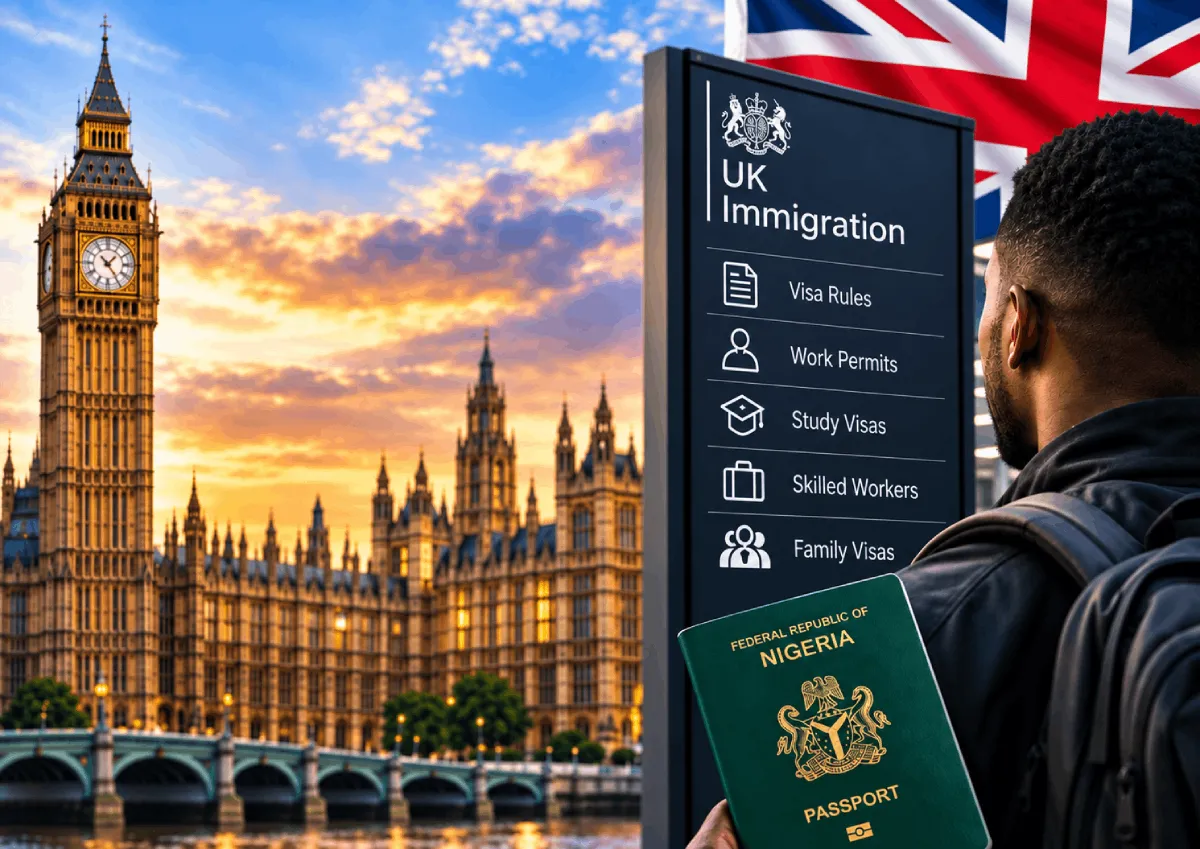
The UK Is Tightening Its Immigration Rules — What Nigerians Need to Know Before 2027
Last modified on September 18, 2026 at 10:29 am

France Tuition Fees 2026–2027: What Non-EU Students Need to Know
Last modified on September 17, 2026 at 3:27 pm