New Parents and Grandparents Program Intake, PGWP Eligibility Changes and Other Canada Updates
July’s Canada immigration news includes the start of a new intake period for the Parents and Grandparents Program, changes to the Post-Graduation Work Permit eligibility, support for wildfire victims and more.
For help and expert advice on your Canadian immigration issue, please contact us on +1 844 312 4979 or reach out to us online today.
Read our 1983 reviews
We have helped over 25,000 people get their visas approved the first time
Complete the form below to request a call back

Parents and Grandparents Program Intake to Begin This Month
The popular Parents and Grandparents Immigration Program is set to accept new applicants this month.
From a period of two weeks starting 28 July 2025, IRCC will send out invitations to apply to interested potential sponsors for the scheme. Approximately 17,860 invitations will be sent out, with the aim to accept 10,000 complete applications.
IRCC have indicated that due to the volume of forms received, only those who submitted an interest to sponsor form in 2020 will receive invitations to apply during this intake period.
Applicants who submitted an interest to sponsor form in 2020 are advised to check the email account they provided in 2020 during the intake period, including any and all spam and junk folders.
Those who are invited to apply will be able to submit their application online through the Permanent Residence Portal or the Representative Permanent Residence Portal.
As an alternative to the Parents and Grandparents Program, applicants who are not selected to apply for this year’s intake are advised to consider applying for a super visa instead, which allows parents and grandparents of eligible Canadian nationals to stay in Canada for up to 5 years at a time.
Update to Eligible Field of Studies for Post-Graduation Work Permit Eligible
The list of eligible field of studies for certain Post-Graduation Work Permit (PGWP) applicants has been updated.
The list pertains to areas of study that must be undertaken by international students in non-degree programs in order to be eligible for a PGWP. Non-participation in an eligible field of study will mean that the applicant will not be eligible to apply for a PGWP.
This is a relatively new requirement, having been introduced in November 2024. The requirement only applies to applicants who applied for a study permit on or after 1 November 2024 and who are enrolled in programs other than bachelor’s, master’s or doctoral degrees.
Around 119 new fields of study in key sectors like health care and social services, education and trades have been added to the lit of eligible fields as of 4 July 2025.
Conversely, 178 fields of study no longer linked to occupations in long-term labour shortages have been removed.
In total, there are 920 eligible fields of study available that are eligible for PGWPs.
New Measures to Support Wildfire Victims
IRCC have announced new measures to assist those who have been affected by recent wildfires in Canada.
As part of these new measures, any Canadian citizens and permanent residents whose passports, citizenship certificates, permanent resident cards or other Canadian travel documents were lost, damaged or made inaccessible by the wildfires can now apply for free replacements.
Applicants who have already paid to replace documents because of the wildfires on or after April 1 2025 can request a refund from IRCC.
In addition, temporary residents (including international students, temporary foreign workers and other visitors) who were directly affected by the wildfires can replace their status documents and apply to restore or extend their status in Canada, or to renew their work or study permit for no charge.
The limited 90-day window for temporary residents to apply for the restoration of their status after losing it will also be waived.
Finally, application and biometric fees will be waived for any foreign emergency services personnel coming to Canada to help fight wildfires.
These temporary measures will remain in place until 30 November 2025 as to allow individuals to focus on recovery and safety and to allow for ample time to secure any necessary documents.
Pre-Removal Risk Assessment Changes for the Democratic Republic of Congo
IRCC have lifted restrictions on pre-removal risk assessments (PRRA) for citizens of the Democratic Republic of the Congo (DRC) in light of worsening conditions in the country.
DRC nationals who received a negative final decision on their asylum application from the Immigration and Refugee Board of Canada or the Federal Court between 5 July 2024 and 4 July 2025 may now be eligible to apply for a PRRA.
Additionally, DRC nationals who submitted a PRRA during this time period may be eligible to submit another application.
Normally, individuals must wait a minimum of 12 months after a negative asylum decision in order to apply for a PRRA. However, IRCC are able to waive this waiting period of there is a “sudden and significant change” in the conditions of an asylum seeker’s country of origin.
The aim of PRRAs is to prevent individuals from being sent back to a country where they face risks such as persecution, torture or other harm.
DRC nationals in Canada who are subject to an enforceable removal order will be contacted by the Canada Border Services Agency to inform them that they are eligible to apply for a PRRA.
How Can IAS Help With Your Canadian Immigration Application?
IAS have a team of immigration consultants and caseworkers experienced in the field of Canadian immigration.
Our CICC-qualified immigration consultants can help you with numerous facets of Canadian immigration, including skilled worker, family, student or provincial-based immigration.
We can also give close guidance and support on Express Entry and the CRS, helping you to maximise your chances of being accepted for one of Canada’s prestigious immigration programmes.
Don’t hesitate to reach out for help on your situation today. Call us on +1 844 312 4979 or reach out to us online.
Table of Contents
Table of Contents will appear here.
Legal Disclaimer
The information provided is for general informational purposes only and does not constitute legal advice. While we make every effort to ensure accuracy, the law may change, and the information may not reflect the most current legal developments. No warranty is given regarding the accuracy or completeness of the information, and we do not accept liability in such cases. We recommend consulting with a qualified lawyer at Immigration Advice Service before making any decisions based on the content provided.
Services we Provide




Related Posts
US October 2026 Visa Bulletin: What Nigerian Green Card Applicants Should Know
Last modified on October 14, 2026 at 5:06 pm

UK Introduces New Immigration Rules: What Nigerians Need to Know
Last modified on October 14, 2026 at 5:05 pm

How to Avoid PERM Suspension Like Microsoft: HR Compliance Checklist
Last modified on October 13, 2026 at 7:57 am

Your Rights While in UK Immigration Detention
Last modified on October 8, 2026 at 5:25 pm

Temporary Protection Transition Scheme Ireland
Last modified on October 6, 2026 at 2:14 pm

New Passport Rule for UK-Ireland Travel on Ferries
Last modified on October 5, 2026 at 4:22 pm

Belgium: Flanders Introduces €180 Single Permit Fee
Last modified on September 17, 2026 at 3:37 pm
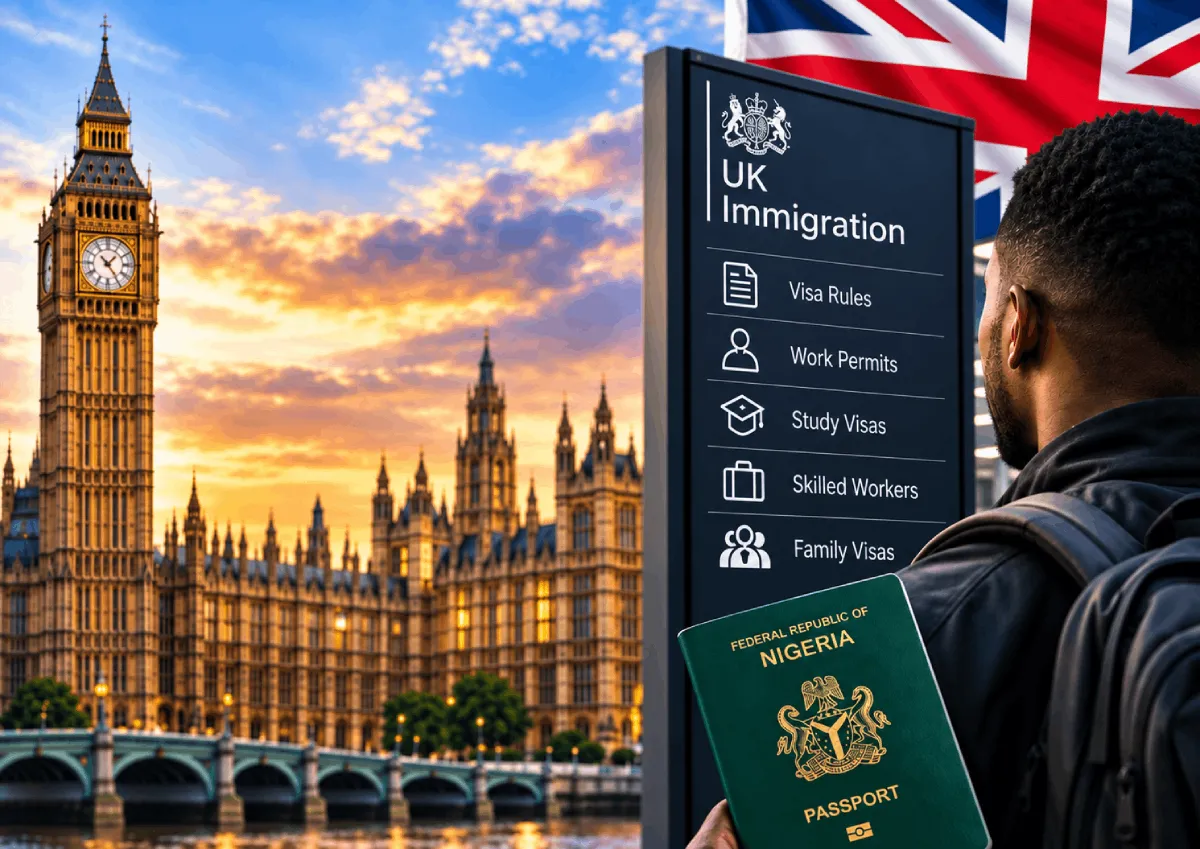
The UK Is Tightening Its Immigration Rules — What Nigerians Need to Know Before 2027
Last modified on September 18, 2026 at 10:29 am

France Tuition Fees 2026–2027: What Non-EU Students Need to Know
Last modified on September 17, 2026 at 3:27 pm