
The Best Countries to Immigrate to from Canada
There are a number of reasons Canadians may want to move to another country, including lower property prices, lower cost of living and a more relaxed pace of life.
IFor more information about your move abroad from Canada, contact IAS’ immigration lawyers for help and advice on +44 (0)333 414 9244 or +1 844 312 4979. Or reach out to us online today.
Read our 1983 reviews
We have helped over 25,000 people get their visas approved the first time
Complete the form below to request a call back

Overview of Emigrating from Canada
Approximately 9% of all Canadian citizens live outside of Canada itself, representing a significant portion of Canadians who have chosen to make their home in other countries.
There are several reasons individuals might have for wanting to move out of Canada, including wanting to move somewhere with a lower cost of living, better weather, easier access to housing or in order to retire abroad.
Because of this, there are a number of viable countries Canadians may wish to consider moving to that may be easier or more accessible than certain other countries.
Here, we take a look at some of the best options for Canadians to move to and consider them based on factors such as cost of living, ease of immigration and long-term settlement options.
United States
The US is a clear and obvious choice for Canadians to emigrate to, given its close proximity, similarities in culture and broad opportunities for jobs, housing and environmental diversity. More than 1,062,640 Canadian citizens already live in the US, which is the largest international group of Canadians outside of Canada.
Cost of Living
The US ranks 9th highest on Numbeo’s ranking of countries by cost of living. However, it is important to consider that the US has some of the most expensive cities in the world such as New York and San Francisco, which would be likely to skew the overall average.
Like Canada, the cost of living in the US can vary hugely based on where you are living, and areas with excellent value for money in terms of property and amenities are abundant in the US.
Below are some key statistics for cost of living in the US, also according to Numbeo:
| Amenity | Cost (in CAD) |
| Basic monthly utilities | 289.60 CAD |
| Rent for 1 bedroom city centre apartment | 2,455.44 CAD |
| Rent for 1 bedroom apartment outside of city centre | 2,026.02 CAD |
| Purchase price for city centre apartment (per sq m) | 4,945.01 CAD |
| Purchase price for apartment outside of city centre (per sq m) | 3,906.35 CAD |
| Average monthly living cost for single person (without rent) | 1,626.2 CAD |
| Average monthly living cost for family of four (without rent) | 5,787.7 CAD |
Ease of Immigration Process
In order to immigrate to the US, you must normally have a sponsor in the form of an employer who has offered you a job or an eligible family member already living in the US.
The employer or family member will first need to apply for a petition on your behalf to USCIS, which will then allow you to apply for the relevant immigrant visa.
There are a wide number of visa types that allow you to settle in the US, though the most common ones are the E preference-based employment visa types, of which there are five subcategories, and the family-based immigrant visas.
Immigrant visas in the US are also known as Green Card visas, after the document that allows the holder to have permanent resident status in the US.
Green Cards are highly desirable and can be difficult to obtain if you don’t already have the relevant work skills or family connections to make you eligible for a visa.

Attitude to Immigrants
The US is one of the most multicultural and diverse countries in the world, being home to people from almost every country in the world.
This is particularly the case in the larger cities such as New York, LA, Chicago and Houston, although large immigrant communities can be found all over the country in smaller cities, towns and villages.
Canadians should find little to no issue with settling into the US, given the similarities in language and culture between the two countries.
Settlement and Citizenship
As previously mentioned, the main way to obtain permanent residence in the US is to obtain a Green Card. Green Cards can be obtained by successfully applying for a relevant immigrant visa.
Once you have had a Green Card for five years, you may then be eligible for US citizenship. You must also attend a naturalisation interview and test, be able to speak English and prove that you are of good moral character.
US citizenship can also be obtained if you’ve been married to a lawful US citizen or permanent resident for at least three years.
The US allows its citizens to hold dual citizenship, which means you will not have to surrender your original citizenship of your home country to become a US citizen.
Job Opportunities
The US has an abundance of job and business opportunities, with the most common jobs being in retail, the service industry, construction, finance, healthcare, admin and marketing. Given the size of the US, job availability will vary widely across the country, and some professions may be easier to find vacancies for than others depending on the location.
However, it should be relatively easy for Canadians to find vacancies for their profession in the US if they are willing to be reasonably flexible with where they live.
Vacancies in high demand in the US include engineering, IT, teaching, healthcare, hospitality and nursing.
Economy and Politics
The US is the biggest economy in the world when ranked by GDP. It has a booming economy across a variety of different industries and sectors, and is often looked towards as a market leader in terms of innovation, industry and business.
Politically, the US is currently led by Republican politician Donald Trump, who is serving his second term in office.
France
France is an attractive proposition for Canadians, especially given the close cultural connections that France and Canada have; French-speaking Canadians may find it much easier to integrate into another Francophone nation, even despite the differences between European French and Quebec French.
Otherwise, France offers a lot of the best of what Europe has to offer in terms of a vibrant international culture, exceptional food and drink and pleasant scenery.
Cost of Living
France is ranked 15th highest in the world for cost of living according to Numbeo, which is lower than the US and other European countries such as Switzerland, Iceland, Denmark, Austria and Ireland. This represents the higher end of cost of living in European countries, though there are many parts of France in more rural areas that will be significantly cheaper than others.
Below are some key statistics for cost of living in France, also according to Numbeo:
| Amenity | Cost (in CAD) |
| Basic monthly utilities | 274.40 CAD |
| Rent for 1 bedroom city centre apartment | 1,139.67 CAD |
| Rent for 1 bedroom apartment outside of city centre | 887.27 CAD |
| Purchase price for city centre apartment (per sq m) | 8,842.95 CAD |
| Purchase price for apartment outside of city centre (per sq m) | 6,005.45 CAD |
| Average monthly living cost for single person (without rent) | 1,402.3 CAD |
| Average monthly living cost for family of four (without rent) | 4,983.2 CAD |
Ease of Immigration Process
You must first obtain a necessary visa before travelling to France, regardless of what you plan to do there. Some visas will allow you to pick up work straight away once you are in France, while others will require you to apply for an additional work permit.
Some of the most common permits available in France include the EU Blue Card for skilled workers, the intra-company transfer permit, or the permit to provide services in France.
In some cases, your employer will be able to apply for a work permit on your behalf before travelling to France.
You must generally also apply for a residence permit once you arrive in France, which will allow you to stay there beyond the initial validity period of your visa.
Initial long-term visas cost around 145.65 CAD to apply for, and can take up to a few months to process.

Attitude to Immigrants
France is generally considered to be a welcoming and friendly nation to foreigners, especially because of its proximity to the rest of Europe and its EU membership, which has increased the ethnic and cultural diversity of the country in the past few decades.
It is recommended that in order to fully fit into French society, foreign nationals take the time to learn the French language, although some to most French people will be able to speak at least a little bit of English.
French Canadians are likely to find it slightly quicker and easier to settle into French society given that there is less of an initial language barrier.
Settlement and Citizenship
Once you have lived in France for five years, you will be able to apply for a permanent resident card.
This card is valid for 10 years at a time and will allow you to settle in France long-term. You will be required to show proof that you have integrated into French society to be eligible, such as demonstrating your French language skills, as well as having a clean criminal record.
French citizenship can be obtained if you have lived in France for an uninterrupted period of at least five years. You must show proof of your French language skills, prove your assimilation into French society and have a clean criminal record.
France allows its citizens to hold dual citizenship, which means you will not have to surrender your original citizenship of your home country to become a French citizen.
Job Opportunities
Some of the most common sectors for employment in France include teaching, agriculture, banking, business management, marketing, and sales.
Meanwhile, some of the most in-demand occupations in France that foreign nationals may be likely to secure jobs for include construction, IT, engineering, manufacturing, accounting and electricians. Business or office jobs are most likely to be concentrated in and around the Paris area, particularly if you are looking for work in the banking or insurance sectors.
Economy and Politics
France has a diverse economy focused mostly on the service, industrial and primary sectors, making up for what is the 7th largest economy in the world by GDP. The economy is expected to grow slightly from 2024 onwards, showing a relatively small but stable progression.
The French state is currently led by president Emmanuel Macron of the centrist and centre-right Renaissance party.
Mexico
Mexico has a number of attractive benefits for Canadians looking to move abroad, including close proximity to the US and the Caribbean, affordable healthcare and housing options, low cost of living and relatively simple visa application processes. For many, Mexico can be an exciting alternative to typically more expensive or difficult immigration options in the US or in Europe.
Cost of Living
Mexico is ranked 60th highest in Numbeo’s overall ranking for cost of living in countries, which is substantially lower than Canada’s 12th placement. This means that for Canadian expats, Mexico may represent a significant reduction in daily expenses and housing, making it an attractive proposition for those wishing to escape from Canada’s increasingly unaffordable cost of living issues.
Below are some key statistics for cost of living in Mexico, also according to Numbeo:
| Amenity | Cost (in CAD) |
| Basic monthly utilities | 85.14 CAD |
| Rent for 1 bedroom city centre apartment | 859.49 CAD |
| Rent for 1 bedroom apartment outside of city centre | 595.72 CAD |
| Purchase price for city centre apartment (per sq m) | 2,555.65 CAD |
| Purchase price for apartment outside of city centre (per sq m) | 1,808.65 CAD |
| Average monthly living cost for single person (without rent) | 868.0 CAD |
| Average monthly living cost for family of four (without rent) | 3,138.4 CAD |
Ease of Immigration Process
Most Canadians looking to come and work in Mexico will apply for a temporary resident visa initially. This will generally require you to show proof of an employment contract with a Mexican company, who will also be the one to lodge the initial application for a work visa. You must then apply for a temporary resident visa at your local consulate or embassy.
Once the visa is obtained, you must then travel to Mexico and register with the local immigration office to obtain a temporary residence card.
There are also a few other Mexican visas available for short stays. There is also a permanent resident visa available, although this normally requires you to fulfil criteria such as having a prior family connection to Mexico.
Work visas typically cost around $50 CAD to apply for and can take up to a few weeks to process.

Attitude to Immigrants
Mexico consistently ranks high on lists of most friendly countries worldwide, which is testament to how friendly and open the local population can be towards foreigners.
Mexico also ranks highly in regards to how easy it is for expats to make friends with foreigners, which is often cited as a concern for expats moving to certain other foreign countries.
For this reason, Canadians may not have to worry as much when considering how well they might fit into local communities, given that there is also already a reasonably large US community living in Mexico.
Settlement and Citizenship
Once you have lived in Mexico for four consecutive years with a temporary residence visa, you may be eligible to apply for a permanent residency visa.
This will allow you to stay in Mexico indefinitely without the need to renew your visa. To be eligible, you must generally earn a certain amount of money via employment per month, or have a certain amount of savings, or have made an investment into Mexico.
To apply for citizenship in Mexico, you must have resided there for at least five years in total and have a clean criminal background. You must also demonstrate ties to the local community and pass a test on Mexican history and culture. Alternatively, you may be able to apply for citizenship after two years if you are married to a Mexican citizen.
Mexico allows its citizens to hold dual citizenship, which means you will not have to surrender your original citizenship of your home country to become a Mexican citizen.
Job Opportunities
Some of the most common occupations in Mexico include those in sales, agriculture, trade, retail and services.
Expats may be able to find work in certain in-demand professions in Mexico such as teaching, tourism and hospitality, finance, business, IT and real estate.
In addition, agriculture, technology, science and manufacturing are common shortage occupations. A 2023 report found that 75% of Mexican businesses struggle to find workers, which may make it easier for Canadian expats to find suitable work in Mexico.
Economy and Politics
Mexico’s economy ranks 12th highest in the world by GDP. It has benefited greatly from free trade agreements with the US and Canada and other countries, while also boasting strong manufacturing and export industries.
The current leader of Mexico is President Claudia Sheinbaum. There are some concerns about crime, corruption and security that Canadian expats may need to make themselves aware of before moving to Mexico.
Panama
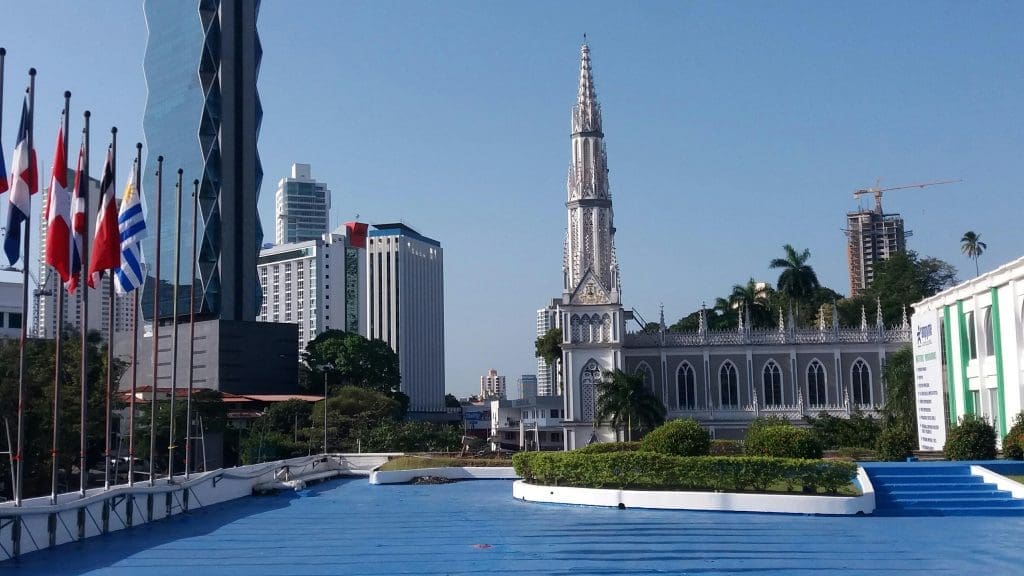
Panama has emerged as one of the most attractive expat destinations in the Americas, given its growing economy, modern infrastructure, low crime rates and low cost of living. Panama also has a range of welcoming business and immigration policies that may help make it easier for Canadians to move there for work or other business purposes.
Cost of Living
Panama is ranked 45th in the world in terms of cost of living, which places it alongside other countries such as Japan, the Czech Republic and Taiwan. Panama is generally seen to have a low cost of living relative to the quality of amenities available, especially in larger cities, where the infrastructure and services available to residents are said to be on par with other cities in the Western world.
Below are some key statistics for cost of living in Panama, also according to Numbeo:
| Amenity | Cost (in CAD) |
| Basic monthly utilities | 143.69 CAD |
| Rent for 1 bedroom city centre apartment | 1,170.05 CAD |
| Rent for 1 bedroom apartment outside of city centre | 866.69 CAD |
| Purchase price for city centre apartment (per sq m) | 3,074.90 CAD |
| Purchase price for apartment outside of city centre (per sq m) | 2,158.01 CAD |
| Average monthly living cost for single person (without rent) | 1,108.4 CAD |
| Average monthly living cost for family of four (without rent) | 3,987.3 CAD |
Ease of Immigration Process
Generally speaking, the requirements to obtain a work visa for Panama include to secure employment with a company in Panama, show proof of accommodation in Panama, obtain a criminal record check certificate and pass a medical test.
You must then visit your local embassy or consulate in order to apply for a permanent resident visa. Once you have obtained the visa, your employer in Panama will apply for your work visa on your behalf.
Self-employment visas are also available in Panama for those wishing to work on a self-employed or freelance basis.
Panama also has the Panama Friendly Nations Residency Program, which allows Canadian citizens to live and work in Panama with a view to obtain permanent residency by obtaining employment from a Panamanian bank, or by making an investment into Panama.
A typical Panamanian visa will cost around $698.67 CAD.
Attitude to Immigrants
Panama is generally seen as a foreigner-friendly country and consistently ranks highly on lists of the best places for expats to settle, based on factors such as how welcoming the country is to foreigners and how easy it is to make friends with the locals.
Panama also has a reasonably large foreign-born population, with the largest nationalities outside of South America being US and Chinese citizens.
Settlement and Citizenship
Generally speaking, you will be able to apply for a permanent residency visa in Panama after spending at least two years residing there. This is also the main way to apply if you hold a Panama Friendly Nations Residency Program visa, which may be the easiest route for Canadians who are looking to settle in Panama permanently.
In order to obtain Panamanian citizenship, you must have lived in Panama for at least five years, demonstrate your Spanish language abilities and prove that you are of good character and good health.
Panama allows its citizens to hold dual citizenship, which means you will not have to surrender your original citizenship of your home country to become a Panamanian citizen.
Job Opportunities
Panama is uniquely placed geographically to take advantage of a number of trade and logistics options, especially centred around the Panama Canal. For this reason, jobs in sectors such as shipping, logistics, engineering, security and finance are reasonably common.
Panama also has jobs in sectors such as agriculture, tourism, IT, renewable energy and the service industry.
Canadians may find it easiest to find jobs in shortage occupations such as HR, administration, sales and marketing, logistics and front office roles.
Economy and Politics
Panama is ranked as the 75th largest economy in the world by GDP. As previously mentioned, a large part of Panama’s economy is formed from logistics and shipping, as well as banking, insurance, commerce, healthcare and tourism.
Panama is also notable as being the first foreign country to officially adopt the US dollar as its currency, which helps to facilitate international trade.
Politically, Panama is currently led by the president, José Raúl Mulino. Panama is generally described as a stable democracy, with a commitment to democracy and the rule of law.
How Can IAS Help?
Moving to another country abroad as a Canadian can be a difficult and stressful experience, given that you will be uprooting yourself and your family to start afresh somewhere else.
That’s why it’s recommended to seek the help of a qualified immigration professional before doing so. This is especially the case if the country you’re moving to has strict or difficult immigration rules, which will place additional emphasis on getting your application right first time round.
IAS’ international immigration lawyers can help you with this issue and ensure that your chosen immigration route to your country can be completed to the highest standard, minimising any risk of refusals and getting your new journey off to the best start.
Call us today on +44 (0)333 414 9244 or +1 844 312 4979 or use our online contact form to find out more about our services and what we can do for you.
Table of Contents
Table of Contents will appear here.
Legal Disclaimer
The information provided is for general informational purposes only and does not constitute legal advice. While we make every effort to ensure accuracy, the law may change, and the information may not reflect the most current legal developments. No warranty is given regarding the accuracy or completeness of the information, and we do not accept liability in such cases. We recommend consulting with a qualified lawyer at Immigration Advice Service before making any decisions based on the content provided.
Services we Provide




Related Posts

US October 2026 Visa Bulletin: What Nigerian Green Card Applicants Should Know
Last modified on October 14, 2026 at 5:06 pm

UK Introduces New Immigration Rules: What Nigerians Need to Know
Last modified on October 14, 2026 at 5:05 pm

How to Avoid PERM Suspension Like Microsoft: HR Compliance Checklist
Last modified on October 13, 2026 at 7:57 am

Your Rights While in UK Immigration Detention
Last modified on October 8, 2026 at 5:25 pm

Temporary Protection Transition Scheme Ireland
Last modified on October 6, 2026 at 2:14 pm

New Passport Rule for UK-Ireland Travel on Ferries
Last modified on October 5, 2026 at 4:22 pm

Belgium: Flanders Introduces €180 Single Permit Fee
Last modified on September 17, 2026 at 3:37 pm
The UK Is Tightening Its Immigration Rules — What Nigerians Need to Know Before 2027
Last modified on September 18, 2026 at 10:29 am

France Tuition Fees 2026–2027: What Non-EU Students Need to Know
Last modified on September 17, 2026 at 3:27 pm